
parchment paper · baking techniques · kitchen equipment
Parchment Paper Cooking Mistakes and How to Fix Them
Parchment is great for easy release and cleanup. It also has a heat limit, curls off the roll, blocks browning and gets confused with wax paper. Here's why each problem happens and the small habits that fix it.
In this guide
- What Parchment Is Built to Do (and Where It Stops)
- Heat Mistakes: Ignoring the Rating, the Broiler and the Overhang
- Mixing Up Parchment, Wax Paper and Foil
- Why Food Still Sticks to Parchment
- Fitting Problems: Curling, Sliding and Wasted Edges
- When Parchment Works Against You: Browning, Searing and Air Fryers
- Parchment Paper Cooking Mistakes With Storage, Reuse and Waste
- A Quick Check Before the Pan Goes In
Most parchment paper cooking mistakes come from treating the sheet as a do-anything liner when it's really a tool with a specific job and clear limits. Parchment releases baked goods well and saves you from scrubbing. But it has a maximum temperature, it changes how food browns, and it misbehaves when it's cut carelessly or stored badly. The fixes are mostly small habits: read the box, trim the sheet, switch to a different liner when the cooking method calls for it, and know when to skip lining altogether.
This guide covers the problems home cooks run into most, why each one happens, and what to do instead. Where facts like temperature limits matter, the sources are linked so you can compare them with the roll in your own drawer.
What Parchment Is Built to Do (and Where It Stops)
Parchment starts as ordinary paper. According to the CUNY Wrapping Guide, the paper is treated with acid to strengthen its fibers and help it resist grease. It then gets a thin silicone coating, which provides most of its nonstick surface and heat tolerance. Reynolds' test kitchen gave Allrecipes the same description: paper with a food-safe silicone coating that is heat-resistant and nonstick. They added that it won't change the taste of acidic ingredients the way foil can.
That coating is the whole point. It lets cookies, sponge layers and roasted food come off without extra fat, and it keeps melted sugar from welding itself to the pan. But it's a surface treatment, not armor. Three limits shape everything else in this guide:
- It has a heat rating. Above that temperature, the paper darkens, turns brittle and can catch fire.
- It insulates. Paper between food and metal slows the direct transfer of heat, which affects crust and browning.
- It's thin and light. Unless something holds it down, it curls, slides and lifts in moving air.
Bleached and unbleached parchment work the same way in the oven. The CUNY guide notes that both have the silicone coating and offer the same nonstick surface and heat resistance. The differences are color and how the paper was processed, so pick whichever you prefer and don't expect one to perform better.
Heat Mistakes: Ignoring the Rating, the Broiler and the Overhang
Assuming every box has the same limit
The most common heat mistake is never checking the temperature printed on the package. Reynolds rates its parchment to 425°F, as reported by Allrecipes, and Martha Stewart's guide gives the same 425°F figure. The CUNY guide says most parchment handles about 420°F (215°C) and stresses checking your specific box. Those numbers are close but not identical, and store brands vary. If you're cooking in a very hot oven, such as a high-heat roast or a crusty bread bake, read the label first. If the package lists Celsius, the converters in FoodEase's kitchen tools make the conversion quick.
What happens above the limit is predictable. The paper turns tan, then brown, then brittle enough to crumble at the edges. The edges char first, which is why a sheet can look fine in the middle of the pan but be blackened at the corners.
Putting parchment under the broiler or on the grill
A broiler aims intense, direct heat at the top of whatever is in the pan, including any exposed paper. The CUNY guide advises against using parchment under a broiler because that exposure can make it ignite. The experts Martha Stewart spoke with say neither parchment nor wax paper belongs under a broiler or on a grill. If you want a lined pan for broiling, foil is the usual choice, but keep it away from very acidic foods (more on that below).
Letting the sheet hang over the edge
A paper overhang helps you lift brownies or bar cookies out of a pan. But loose paper sticking out past a sheet pan can touch the oven walls or drift toward a heating element. The CUNY guide specifically warns against placing parchment near heating elements or exposing it to open flame. Trim the sheet so it sits flush with the pan rim, or leave only a short, firm lip on two sides for lifting. Some cooks lay a circle of parchment called a cartouche over a simmering braise on the stovetop. If you do, cut the circle to sit inside the pan, well away from any gas flame.
Lining the pan before the oven is hot
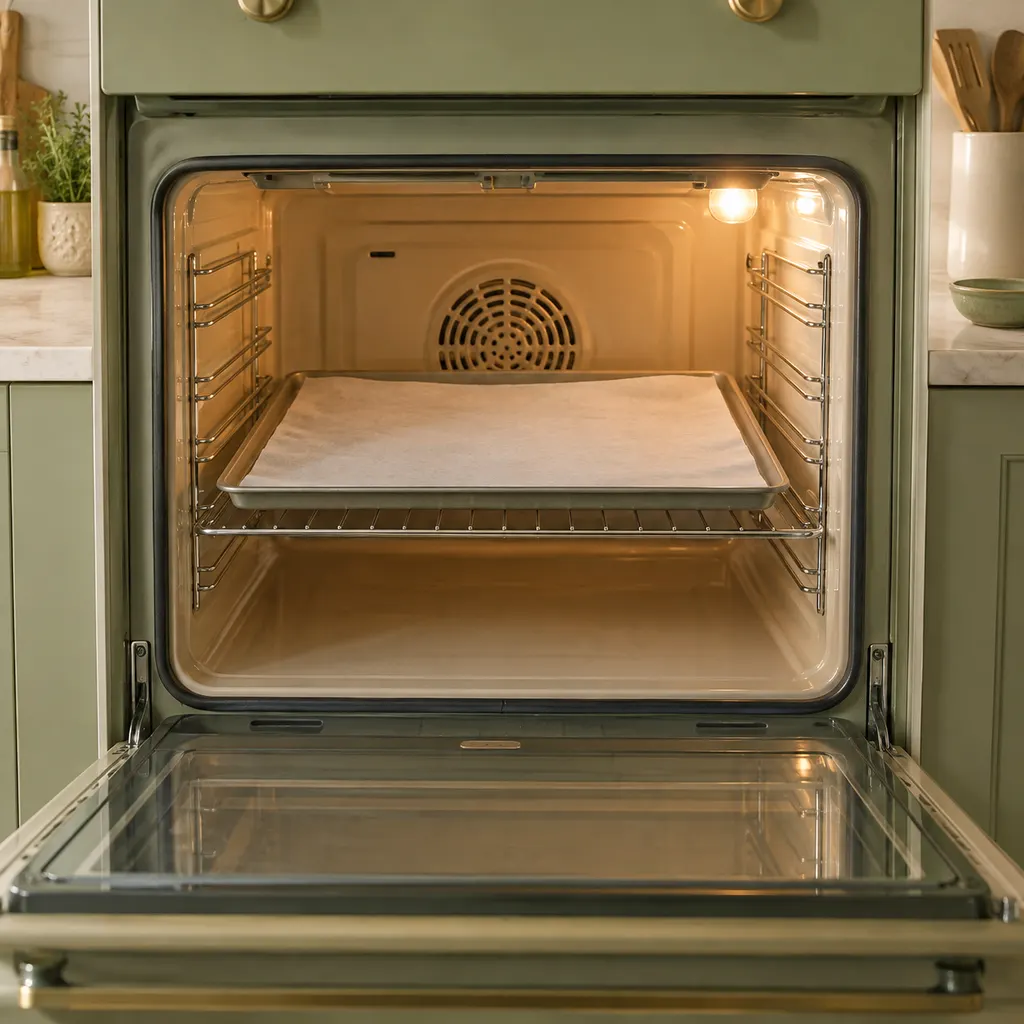
Put the parchment in the oven with the food, not before. The CUNY guide recommends preheating first and then putting in the lined pan. A sheet sitting alone in a heating oven has nothing weighing it down, so it can shift toward an element when the fan or convection air starts moving.
Mixing Up Parchment, Wax Paper and Foil
These three rolls often share a drawer, which makes grabbing the wrong one an easy mistake. They are not interchangeable.
Wax paper is coated with paraffin wax instead of silicone. A toxicologist interviewed for Martha Stewart says it can melt at temperatures over 120°F and may smoke or catch fire in a hot oven. It's still useful for rolling sticky dough between two sheets, catching drips during chocolate work, or separating layers in the fridge. Martha Stewart also reports that the USDA and Reynolds consider it safe in the microwave. It just doesn't belong in the oven.
Foil has its own trade-offs. Reynolds' experts told Allrecipes that foil needs butter, oil or cooking spray before baked goods will come off it cleanly. Foil can also react with highly acidic ingredients and give them a harsh taste. Parchment doesn't react with food.
| Material | Oven use | Best jobs | Watch out for |
|---|---|---|---|
| Parchment | Yes, up to the rating on the box (often 420–425°F) | Cookies, cake pan liners, sheet-pan bakes, sealed packets (en papillote) | Broilers, grills, overhang near elements, very high-heat roasting |
| Wax paper | No | Rolling dough, catching drips, wrapping, separating layers in storage | Melting and smoking when heated |
| Foil | Yes, including broiling | Broiler pans, high-heat roasting, covering food loosely | Sticking without fat; reacting with acidic foods |
| Silicone baking mat | Yes, up to the maker's rating | Repeated cookie and pastry batches | Must be washed and stored flat; check the temperature limit |
One simple habit prevents mix-ups: give each roll its own labeled spot, or keep wax paper in a different drawer entirely. If you've moved parchment into an unmarked dispenser, touch the surface. Wax paper feels slightly tacky and waxy, while parchment feels smooth and dry. If you're not sure, keep it out of the oven.
Why Food Still Sticks to Parchment
Parchment releases food well, but not always. When something sticks, one of a few things is usually going on.
Sugar and cheese glue themselves down
Caramelized sugar, melted cheese and starchy coatings can bond to almost any surface as they cool and harden. Vegetables with a crispy coating and thin, lacy cookies are the classic culprits. The fix is timing. Let the food set for a minute or two so it holds its shape, then lift it while it's still warm. If it has already hardened, a short trip back into the warm oven can soften the bond enough to release it cleanly.
You're pulling the food off the paper
Prying a delicate cookie or cake layer upward tears it. Instead, slide the whole sheet onto a cooling rack and let it cool briefly. Then flip the item, or hold it steady, and peel the paper back and away from the food at a low angle. For cake layers, turn the cake out onto a rack and peel the paper circle off the bottom like a sticker.
Moisture is pooling under the food
Very wet foods, such as marinated vegetables or juicy fruit, release liquid that soaks the paper and can leave a sticky, sugary film. Pat ingredients dry, spread them in a single layer with space between the pieces, and don't crowd the pan.
It isn't the paper you think it is
If your results changed suddenly with a new box, the brand or product may be the cause. Check that the roll really is parchment, not wax paper or a "baking paper" with different instructions. For foods known to grip, like cheese crusts or sticky glazes, a very light film of oil on the paper is a reasonable backup. A good sheet usually doesn't need it for ordinary cookies.
Fitting Problems: Curling, Sliding and Wasted Edges
Parchment wants to curl back up when it comes off the roll. That makes lining a pan fiddly and lets batter creep underneath. These techniques keep it in place:
- Crumple, then flatten. Scrunch the sheet into a loose ball, open it and smooth it out. Once the curl is broken, the paper lies flat and presses into corners, which is especially handy for loaf pans and casserole dishes.
- Anchor the corners. A small dab of butter, oil or batter in each corner of the pan holds the paper down like glue. When you're rolling dough on a sheet, a little water on the counter does the same job.
- Roll it the other way. Tear off the sheet and roll it briefly in the opposite direction before laying it down.
- Cut to size. A sheet trimmed to fit the pan sits flat, doesn't flap, and leaves no extra paper to burn.
Cutting circles and slings
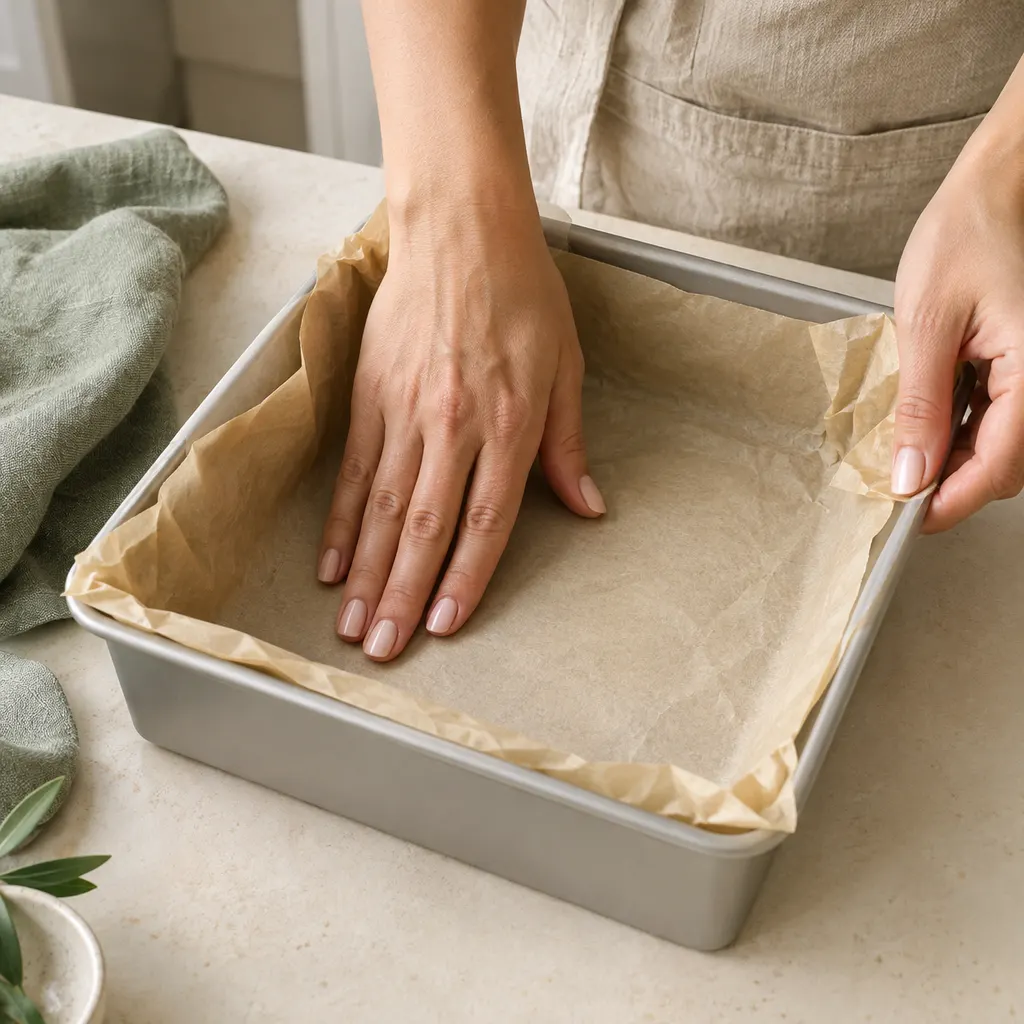
For a round cake pan, fold a square of parchment in half, then in quarters, then into a narrow cone. Hold the point at the center of the upside-down pan, snip where the paper reaches the edge, and unfold. You'll have a circle that fits the base. For square and loaf pans, make a sling: lay one strip across the pan in each direction, with a short overhang at the ends, so you can lift bars or loaves straight out. Crease the paper into the corners with your fingers instead of letting it bunch up, because folds and bubbles leave marks on the bottom of the food.
If you line the same pans often, cut a stack of liners at once and store them flat inside the pan or in a folder. Lining then becomes a quick grab-and-go step, and the stack fits neatly into the zones described in our guide to kitchen counter organization.
When Parchment Works Against You: Browning, Searing and Air Fryers
Lining a pan isn't automatically an improvement. The paper sits between the food and the hot metal, and that changes the result.
Roasting vegetables and crisping meat
Food browns on a sheet pan through direct contact with hot, dry metal. Parchment adds a layer in between and can trap a little steam, so vegetables tend to soften instead of charring. Skin-on chicken or roast potatoes may not get the same crust. If browning is the goal, roast directly on a preheated, lightly oiled pan and accept the extra washing up. If gentle, even cooking matters more, as with delicate fish or cookies whose bottoms shouldn't get too dark, parchment is the better choice. Searing a steak on parchment in a skillet is the clearest mismatch, because the paper blocks the contact that creates a crust.
Cooking en papillote
Steam trapping has an upside, too. Cooking en papillote means folding fish or vegetables inside a sealed parchment packet, a method the CUNY guide describes, so the moisture stays in. The common mistakes are sealing the packet loosely, which lets steam escape, and leaving long paper ends that could touch a heating element. Seal the edge with small overlapping folds and keep the packet well inside the pan.
Air fryers
An air fryer moves hot air fast. An empty sheet of parchment can lift into the heating element. Only add paper when there's food on top to hold it down, trim it so it doesn't cover the whole basket floor, and check your appliance manual for its own guidance. Covering every hole also blocks airflow, which can leave food less crisp.
Skillets
Cooking on parchment in a skillet has become a popular trick. But stovetop heat isn't controlled like an oven dial, and the pan can easily get hotter than the paper's rating. Keep all the paper inside the rim and use moderate heat. If the sheet darkens or scorches, stop.
Parchment Paper Cooking Mistakes With Storage, Reuse and Waste
Storing it where it gets damp or crushed
The CUNY Wrapping Guide recommends keeping parchment in a cool, dry place and handling it with clean, dry hands, because moisture and oils can affect its surface. A roll stored above the kettle or crushed under pans tends to wrinkle and tear. Keep it flat and easy to reach in a shallow drawer away from the stove or in a wall-mounted dispenser near where you bake. Pre-cut sheets can sit flat in the bottom of a sheet pan in the cupboard.
Reusing a sheet too many times
The CUNY guide treats parchment as single-use. It says reuse weakens the nonstick surface and makes tearing or burning more likely. In practice, many bakers run a second tray of the same dry bake on a sheet that's still clean and flexible. If you do, throw the sheet out once it's dark, brittle, greasy or scorched. Never reuse paper that held raw meat or fish.
Lining when you don't need to
The easiest way to cut parchment waste is to use it only where it helps: sticky bakes, delicate cake layers, en papillote packets and sugary glazes. For plain roasted vegetables you want browned, a bare pan is often better anyway. For cookie trays, a silicone baking mat is the usual reusable swap, and both the CUNY guide and Martha Stewart's guide list mats as an alternative. A bare pan means more cleanup, so if cast iron is your everyday pan, see our guide to cleaning cast iron without losing seasoning.
Putting leftover pieces to work
Clean offcuts are still useful outside the oven. You can roll one into a funnel for pouring dry ingredients, use it to separate items in the freezer, or lay it down as a shelf liner. In an article for The Spruce, a cleaning expert describes laying foil or parchment on top of kitchen cabinets to catch dust and grease, then replacing it at least twice a year. Unused offcuts are a good fit for that job.
A Quick Check Before the Pan Goes In
- Read the box. Confirm it's parchment and note the temperature limit.
- Compare it with the oven setting. If the oven will be hotter than the limit, use foil, a bare pan or a mat rated for that heat.
- Trim the sheet. Leave no paper hanging near elements, oven walls or a flame.
- Hold it down. Crumple the sheet, dab the corners with fat or roll it against the curl.
- Decide whether you want browning. If you do, skip the paper.
- Plan how you'll get the food off. Decide whether you'll lift it warm, let it cool on the sheet or peel the paper away.
Planning a week of baking or sheet-pan dinners also shows you how much parchment you'll actually use. Map out your meals in the FoodEase meal planner and add a new roll to your shopping list before the old one runs out, so you're never tempted to substitute wax paper mid-bake. When you choose a dish from FoodEase recipes, compare its oven temperature with the limit on the box first. If you're unsure about a step, you can ask Sue, the app's cooking assistant, to walk you through it.
Common questions
What should you not cook on parchment paper?
Don't use parchment under the broiler, on a grill, or in an oven hotter than the temperature printed on the box, which is often around 420–425°F. It's also a poor choice when you want deep browning or a hard sear, because the paper sits between the food and the hot metal. A loose sheet in a preheating air fryer is another problem, because moving air can lift it toward the element.
Why is my food sticking to parchment paper?
Sugary, cheesy or very wet foods can bond to the paper as they cook and cool, especially if you lift them too early or wait until they've fully hardened. Let baked goods set briefly. Then peel the paper away from the food instead of prying the food up. Also check that you're really using parchment, because wax paper and some baking papers release much less reliably in a hot oven.
Do you cook with parchment paper shiny side up or down?
Not every manufacturer covers this, so the box is your best guide. If it names a side, follow it. If it doesn't, lay the sheet whichever way it flattens best. If one batch sticks more than usual, try the other side on the next sheet and compare. If your results change suddenly, first check whether you've switched brands or picked up wax paper by mistake.
Why did people stop using parchment?
Some cooks have cut back because parchment is a single-use product that adds cost and waste. It also isn't always needed: a greased metal pan or a silicone baking mat often works just as well. Reusable silicone mats are the usual swap. Questions about coatings also circulate online. If that concerns you, look for the manufacturer's own information instead of relying on social media posts.
Can parchment paper go under the broiler?
No. The CUNY Wrapping Guide and the experts Martha Stewart interviewed both advise against using parchment under a broiler, because the intense, direct heat can char and ignite it. If you want a lined pan for broiling, use foil. Keep in mind that foil can react with very acidic ingredients and may need a little fat so food releases cleanly.
Can I reuse parchment paper?
The CUNY Wrapping Guide calls parchment single-use. It says reuse weakens the nonstick surface and makes tearing or burning more likely. Many home cooks still bake a second tray of the same dry item on a sheet that's still clean and flexible. If you do, throw the sheet out once it looks dark, brittle, greasy or scorched. Never reuse paper that held raw meat or fish.